Showing posts with label Business Enterprises. Show all posts

Saturday, December 27, 2014

-=Welcome to Wood Fluor / Powder Delima Mas Indonesia=-

Dear Hello ! 


We are from Indonesia and we are sell and produce manufacturer the (Grajen) wood flour (sawdust) / wood powder / Teak / Mahogany / Mixed / Borneo Wood / Wood java / albasiah / Merbaung / Trembesi / Camphor / Sticky etc, with a fineness of 60 mesh, 80 mesh, 140 mesh up as a customer request with a production capacity 1000 - 2500 tons per month and Ready to Export for +5000 ton / month to Worldwide Shipment All round the World's. 

We are here to serving you !

shipment3.jpg (360×249)

For more further information 

Please Call us now on Here

Ready Stock - Our Product Wood Fluor Manufacturer

WOOD POWDER
 (Tectona grandis) 


Stock Our production per month / week / day 

- Pure Teak wood flour (  Ready Stock  )  
  700 Ton Capacity Produck more / Monthly

- Teak wood flour mixture is Merbaung  (  Ready Stock  )  
  Produck Capacity 500 Tons more / Monthly

- Flour Mixes rosewood mahogany  (  Ready Stock  )  
  Capacity 700 Tons Produck more / Monthly

- Flour Mixes rosewood mahogany, Merbaung, Camphor, Trembesi [Hardwood]  
  (  Ready Stock  )  
  1500 Ton Capacity Produck more / Monthly

- Flour Mixes Mahogany wood, Merbaung, Camphor, Trembesi [Hardwood]  
  (  Ready Stock  )  
  Capacity Produck 2000 tons more / Monthly

- Wood Flour Sticky   (  Ready Stock  )  
  Produck Capacity 400 Tons more / Monthly

- Flour Mahogany Murny  [Coarse / Fine]  (  Ready Stock  )  
  350 Ton Capacity Produck more / Monthly


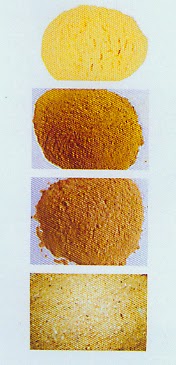
Teak wood flour or Teak wood powder is one of the main ingredients for the manufacture of mosquito coils, incense, glue mixture, mix for concrete flexibility, and is also used as material for motorcycle brake. We produce flour teak wood (teak wood powder) of teak wood sawdust (teak wood sawdust) with the following specifications:


Particle size :
60 mesh / 
80 mesh / (coarse) 
140 mesh / (0,4) 
200 mesh / (fine) 

Mesh Size ( % ) :  Min 98

Color : Brown - White Brown

Calories : 3000 >

Water Content : <13%

Packaging : 50 kg - 100 kg / sack

Raw Material: Teak Wood Sawdust and More 


Tectona grandis our Resources derived from teak wood that has the appropriate land is slightly alkaline, with a pH between 4.5 - 7 / 6-8, the nest (have good aeration), contains quite a lot of lime ( Ca, calcium) and phosphorus (P),  and is not flooded with water.

Type teak
  1. Teak  lengo  or  teak  night , have wood is hard, heavy, feels smooth when touched and the like containing oil (java:  lengo , oil;  night , candles). Dark, mottled and striped much.
  2. Teak  sungu . Black, solid and heavy (java:  sungu , horn).
  3. Teak werut , with hard wood and fiber choppy.
  4. Teak doreng , woody very hard with the color black striped lit, very beautiful.
  5. Teak flowers .
  6. Teak limestone , wood whitish because it contains a lot of lime. Less powerful and less durable.


Standard Class Type Wood Flour Manufacturer

Adhesives  (SMOOTH)  

A1  : Merbau, Camp er, Meranti, Mahogany [Hybrit] 

Combustion  (ROUGH)  

B1  : Acacia, Teak [50%], Balsa, Sono Keling, Mahogany [Hybrit] 


Application of Wood Flour Grajen Teak: 

- Flour Grajen Teak is widely used as a stuffing for incense. 

- Flour Grajen Teak is used as a filler and extender for plastic wood products. 

- Flour Grajen Teak is used for the manufacture of mosquito coils. 

- Flour Grajen Teak is used for material raw canvas motorcycle brakes. 

- Flour Grajen Teak is used as raw material for the manufacture of bricket.  

- Flour Grajen Teak is used for fertilizer mix mushroom cultivation. 

- Flour Grajen Teak is used to mix the fertilizer for the soil. 


Which Can be Used too by:

-Mosquito Coil Industry 
-Fertilizer 
-Oil and Oil Drilling 
-Furniture


Particle size 60 mesh / 80 mesh / 140 mesh (0,4)
Color                        : Brown
Water Content      : <13%
Packing                   : 50 kg / 100 kg / bags
Capacity                :  500 tons per month  


We also carry stock for Grajen 

MOLDING AND PLANNER 


 Offer Price: Please contact us  Click Here!

The Species of Wood

Species of wood

In the following you see an overview, the high-quality species of wood used by thebalinesischen art boobs. 

Cendana (sandalwood, Santalum album)Cendana (Sandelholz, Santalum album)
Probably the most expensive and most valuable wood. Even the wooden flour is used to the production by rod of perfume. These are used with ceremonies. Also in the traditional medicine sandalwood finds his place.

The ideal wood for the craft. Hard, very fragrantly, firmly and robustly. Very seldom, a category for himself.
Magnolia (Magnolia)
A species of wood which is normally used for the construction by temples. It is difficult to find the really active trees, and therefore also sculptures and craft work of magnolia wood.

Some people call this species of wood holy. Earlier the blossom became traditional than hair cream, today to the perfume production used. The wood is less robust and firm.

Nangka (jack fruit, melon-like fruit, Artocarpus heterophyllus)
An expensive species of wood, also for the construction of temples and for the production of the basic frame of the Gamelan (traditional instrument; mead allophone with blow work) is used.
By the yellow colouring the wood is easy to recognise.

Jepun (Frangipani, temple tree, Plumeria)
The blossom is known by the fine smell and the white-yellow colouring very much. The wood has a soft surface and structure. Nowadays the expensive flower essence of the temple tree is used to the perfume production.


Jati (teak wood, Tectona grandis)
Very robust wood with exotic grain. It is a popular wood to the furniture production.Sehr robustes Holz mit exotischer Maserung. 
Es ist ein beliebtes Holz zur Möbelherstellung.
The teak wood does not find often use with statues or sculptures, but rather with reliefs or coverings.
Pangal buaya (crocodile woodZanthoxylum rhetsa)
The wood is suited very well to the production by sculptures. Not very hard and robustly, rather softy, with nice exotic grain. Some artists retain the surface with spinous processes on the sculptures to lend an individual style to the work.

The gnarled spinous processes remind of crocodile teeth, and give his name to the wood. Because of the bright colour it is also called the "ivory of the wood".


Sawo (SapodillaManilkara zapota)
Investigations in old temples in Egypt and Mexico proved that at that time this wood already uses, and his long durability was estimated.
The wood is also suitable very well to the production of sculptures, because it breaks during the treatment not easily. The dark colouring and the nice grain round the picture.

Mahoni (mahogany, Swietenia macrophylla)
Mahogany is well suited to the furniture production, and on account of his brown-reddish colouring very much popularly. It has a fine grain and is also used to the production by statues in bigger number of pieces, because the wood is not so expensive. 


Waru (HibiscusHibiscus sabdariffa)
The probably most favorable wood. 
Very easily and softy and with bright colouring.

Thermal and Mechanical Properties of Wood-Plastic Composites from Iron Wood Flour and Recycled Polypropylene Foam

Journal of Metals, Materials and Minerals. Vol.18 No.2 pp.53-56, 2008
Thermal and Mechanical Properties of Wood-Plastic Composites from
Iron Wood Flour and Recycled Polypropylene Foam
Monchai TAJAN, Phasawat CHAIWUTTHINAN and Thanawadee LEEJARKPAI
National Metal and Materials Technology Center, 114 Thailand Science Park,
Paholyothin Rd., Kolng 1, Klong Luang, Pathumthani 12120'

Abstract

In this work some of the important properties of experimentally manufactured wood-plastic
composites (WPC) were determined. Specimen having 30% particle of Iron wood (Xylia Xylocarpa) was
mixed with recycled polypropylene foam (RPPF) and two different additives, glycerol as a plasticizer and
maleic anhydride grafted polypropylene homopolymer (MAPP) which is a compatibilizer. The thermal and
mechanical properties of the composites were analyzed and compared with those of non-additive
composites. Compared with RPPF, Iron wood/RPPF composites had higher melting and crystallization
temperature, but much lower crystallinity level. Their thermal stability was lower than RPPF due to the
degradation of the wood flour. The experimental results revealed that addition of the wood flour increased
the tensile modulus, but decreased the values of the tensile strength and elongation at break of the
composites. The uses of plasticizer and compatibilizer have been shown to influence on the thermal and
mechanical properties of the composites. The results indicate that both glycerol and MAPP improved the
compatibility of the Iron wood flour and RPPF in the composites, lead to the good properties determined for
these materials.


Key words :

Iron wood flour ; Recycled polypropylene foam ; Wood-plastic composites
Introduction
Wood-plastic composites have received
considerable attention from industry in recent
years. Much work has been done on wood flour
and virgin thermoplastic composites, which
succeed in wood composite industry. However,
work done on wood flour/recycled plastic systems
is still limited. Polypropylene foam is widely used
in packaging applications and transportations, and
can be collected to recycling process. Thus,
recycled PP foam is an alternative source of raw
material. Most of the physical and mechanical
properties of the wood-plastic composites depend
mainly on the interaction between the wood and
the thermoplastic material. One way to improve
this interaction is incorporating the compatibilizer.
Several studies showed that using PP modified
with maleic anhydride as a compatibilizer in the
wood-plastic composites significantly increased
interfacial bonding between the wood flours
and the plastics.(1,2) However, the wood-plastic
composites also have problems because of
characteristic of the wood flour, such as the
thermal degradation and the dispersion of the wood
flour during a compounding. On the other hand, the
use of a plasticizer may be one way to reduce
the thermal degradation and the dispersion of the
wood flour. Therefore, the main objective of this
work is to investigate the effect of plasticizer and
compatibilizer on the thermal and mechanical
properties of the wood flour and the recycled PP
foam composites.

Materials and Experimental Procedures

Materials

Recycled polypropylene foam (RPPF) was
provided as the plastic pellets by S. Pinya recycle
Co., Ltd. Its melting temperature was 109°C and
melt flow index was 9.9 g/10min at 230°C, 2.16 kg
load. Its density at room temperature was 0.889
g/cm3

. Four types of the wood flours were
analyzed by TGA to assess the thermal stability.
The results are summarized in Table 1. The
degradation temperature of the Iron wood flour
listed in Table 1 was the highest, and then used as
filler in this work at 30% by weight. The Iron
wood flour was sieved with a 500-mesh screen.
Before use, it was also oven-dried at 80°C for 24 h
and its moisture content was controlled at lower
than 2%. Mixing of the Iron wood flour and the
RPPF plastic along with a commercial glycerol
Phone 0-2564-6500 # 4457, Fax. 0-2564-6445, E-Mail: monchait@mtec.or.th
Received Nov. 13, 2008
Accepted Jan. 30, 2009 54
TAJAN, M. et al.

content of 3% by weight, play as a plasticizer.
Maleic anhydride grafted polypropylene homopolymer
(COMPOLINE CO/PP H60) was used as a
compatibilizer, in the content of 5% by weight,
supplied by Behn Meyer Chemical (Thailand) Co.,
Ltd. The melt flow index of 60g/10 min at
230°C/2.16 kg, a graft level of 0.25-0.5%, and the
melting temperature of 165°C.
 Table 1. Thermal stability of the different wood flours
 with thermogravimetric analyzer.

Methods
The raw materials were first dry blended
with a high speed mixer and then fed into a 20 mm
laboratory co-rotating twin screw extruder.
The barrel, screw and die temperatures were held
constant between 180-220°C, with the screw
speed of 150 rpm. Thermogravimetric analysis
was used to study the thermal stability of the wood
flours and the resultant composites with a
thermogravimetric analyzer (Mettler Toledo
TGA/SDTA 851e), under air at a scan rate of
20°C/min from 30-600°C. Experiments on the
thermal behavior of the composites were carried
out on a Mettler Toledo DSC 822e differential
scanning calorimeter. The sample size was about 5
mg with a heating rate of 10°C/min. The specimens
(specific dumbbell shape W=10 mm, L=100 mm,
D=3 mm) of the composites were prepared by
injection moulding at the melting temperature
profiles of 150-170°C and the injection speed of 20
mm/s. At least five specimens were measured for
the tensile properties, using an Universal Testing
Machine (INSTRON Model 55R4502) with a
crosshead speed of 50.0 mm/min.

Results and Discussion

Thermal Properties

When the 30% Iron wood flour was added
to RPPF, both melting temperature (Tm) and the
crystallization temperature (Tc) were significantly
increased whereas decreased the crystallinity
level (attributed to enthalpy of melting and
crystallization on DSC thermogram) as shown in
Figure 1. The wood flour particles could act as a
nucleating agent during the nucleation stage to
increased the crystallization temperature of the
composites. However, it could also act as an
interfering agent during the growth stage to
decreased in the overall crystallinity level of the
composites. Adding only the plasticizer or
compatibilizer did not obviously influence the
crystallinity level, whereas severely changed when
they were added together. The lowered crystallinity
level with introducing both plasticizer and
compatibilizer suggested that the compatibility
between the Iron wood flour and RPPF matrix was
improved.(3)


Figure 1. Thermal properties of the Iron wood/RPPF
 (30/70 w/w) composites (a) melting temperature
 and enthalpy of melting; and (b) crystallization
 temperature and enthalpy of crystallization
 (RPPF : recycled polypropylene foam, P :
 plasticizer, C: compatibilizer, NP : no plasticizer,
 and NC: no compatibilizer).

The TGA and DTG (is the first derivative
of the TGA) curves of RPPF and composites
under air are represented in Figure 2 and 3.

The
thermogravimetric analys is of RPPF showed a
Wood Flours Degradation Temperature
(°C)
Para rubber (general) 328
Para rubber (dark) 333
Para rubber (light) 310
Iron wood 356
108
113
118
123
128
133
138
143
148
153
RPPF NPNC PNC NPC PC
Melting Temperature (°C)
42
50
58
66
74
82
90
98
Enthalpy of Melting (J/g)
Melting Temperature
Enthalpy of Melting
95
97
99
101
103
105
107
RPPF NPNC PNC NPC PC
Crystallization Temperature (°C)
45
55
65
75
85
95
105
Enthalpy of Crystallization (J/g)
Crystallization Temperature
Enthalpy of Crystallization
(a)
(b)55

Thermal and Mechanical Properties of Wood-Plastic Composites from Iron Wood Flour
and Recycled Polypropylene Foam
single-mass loss step with maximum degradation
rate at 433°C indicated the degradation of saturated
and unsaturated carbon atoms in polypropylene.


All the composites showed multi-stepped
degradation due to the various species present. An
initial transition around 100°C due to moisture
evaporation. The first degradation peak around
380°C could derive from the degradation of
cellulosic components. The next degradation peak
around 430°C was due to the degradation of the
polymer matrix in the composites. Above 450°C
the composite showed some peaks of degradation
are probably related to further breakage of
degradation products formed during the thermal
analysis.

Figure 2. TGA curves of the Iron wood/RPPF (30/70 w/w)
 composites.

Figure 3 DTG curves of the Iron wood/RPPF (30/70 w/w)
 composites.

Moreover, the DTG curve of the
composites with the plasticizer addition showed the
degradation of the glycerol around 250°C.(2,3)
For the Iron wood/RPPF composites, it was
verified that the maximum degradation rate was
shifted to a lower temperature. This is indicated
that the present of the wood flour lowered the
thermal stability of the materials. However, the
degradation temperature of the wood flour
increased about 20°C in comparison to the neat
wood flour which might derive from RPPF coating
around the wood flour. The plasticizer and
compatibilizer seemed to have different influence
on the thermal degradation of the composites. The
glycerol showed better heat degrading inhibition
than that of MAPP compatibilizer. However, the
addition of both plasticizer and compatibilizer
together lowered the degradation temperature of
the materials. It was recommended that maleic
anhydride, in the presence of moisture from wood,
could convert to maleic acid which stimulated to
degradation of the composites.(4)

Mechanical Properties
Figure 4. Showed the tensile strength,
tensile modulus and elongation at break of the
composites. It can be clearly observed that
introducing the Iron wood flour increased the
tensile modulus, but decreased the values of the
tensile strength and elongation at break, when
compared to those of recycled PP foam. It is
interesting to note that the tensile modulus
progressively increased with addition of the wood
flours, probably caused by the fact that the wood
flour is more rigid than the plastic. However, the
decreases in tensile strength and elongation at
break were probably caused by a number of
reasons, as suggested by Sombatsompop et al.(5)

Figure 4. Also showed the effect of the
plasticizer and compatibilizer on the mechanical
properties of the Iron wood/RPPF composites. In
general, it was observed for all compatibilizers that
tensile strength and tensile modulus of the
composites were found to increase, accompanied
by a decrease in elongation at break, with
introducing MAPP compatibilizer. The decrease in
elongation at break was expected since the
composites with MAPP compatibilizer now were
stiffer and had higher strength. Surprisingly,
introduction of glycerol as the plasticizer resulted
in increasing tensile strength and elongation at
break. It seems act as another compatibilizer in this
wood/plastic system. The addition of both
plasticizer and compatibilizer simultaneously
showed the positive effect to enhance the tensile
0
20
40
60
80
100
0 100 200 300 400 500 600
Temperature (°C)
Weight (%)
RPPF
NPNC
PNC
NPC
PC
-0.012
-0.01
-0.008
-0.006
-0.004
-0.002
0
0 100 200 300 400 500 600
Temperature (°C)
Derivative Weight (1/°C)
RPPF
NPNC
PNC
NPC
PC56
TAJAN, M. et al.

strength, whereas showed the negative effect to
reduce tensile modulus and elongation at break of
the composites.

Figure 4. Mechanical properties of the Iron wood/RPPF
 (30/70 w/w) composites (a) tensile strength;
 (b) tensile modulus; and (c) elongation at break.

Conclusions

The experimental results indicated the
increase of the melting and crystallization
temperature, accompanied with the decrease of the
crystallinity level, thermal stability, the tensile
strength and elongation at break of the Iron
wood/RPPF composites with the presence of the
Iron wood flour, as it was expected. However, the
addition of the polymeric compatibilizer produced
composites with better performance, since the
tensile strength was increased. This behavior can
be attributed to the enhanced chemical compatibility
between the components. Moreover, we have
observed the positive effect of glycerol on the
maleic anhydride compatibilizer. Thus, to more
effectively improve the thermal and mechanical
properties of the composites, glycerol as plasticizer
and a MAPP compatibilizer should be selected.

Acknowledgement

The authors would like to thank National
Metal and Materials Technology Center (MTEC)
for financial support to this work.

References
1. Andrzej, K. B. and Omar, F. 2006. Injection
moulded microcellular wood fibre
polypropylene composites. Composites
Part A: applied science and manufacturing
37 : 1358-1367.
2. Sonia, M. B. N., Graziela, S. C. and Simone, M.
L. R. 2007. New polymeric coupling agent
for polypropylene/ wood flour composites.
Polym. Test. 26 : 619-628.
3. Yong, L., Qinglin, W., Fei, Y. and Yanjun, X.
2007. Preparation and properties of
recycled HDPE/natural fiber composites.
Composites Part A: applied science and
manufacturing 38 : 1664-1674.
4. Maged, B., Equistar Chemicals. 2003.
Development of new generation coupling
agents fro wood plastic composites. In :
Intertech Conference The Global Outlook
for Natural and Wood Fiber Composites.
New Orleans, December 3-5.
5. Sombatsompop, N., Yotinwattanakumtorn, C.
and Thongpin, C. 2005. Influence of type
and concentration of maleic anhydride
grafted polypropylene and impact modifiers
on mechanical properties of PP/wood
sawdust composites. J. Appl. Polym. Sci.
97 : 475-484.

There are many uses for Wood Flour including...

  • - Animal Feed Fillers
  • - Plastic Fillers
  • - Oil and Water Solidification
  • - Toilet seats
  • - Decking
  • - Marina Products
  • - Automotive Components

Do you have wood or other fiber waste in large volumes?

We would like to talk with you. We can come to you to pick up your clean sawdust, shavings, and harvested waste wood or other fibrous residuals. Please call us at (+062) 8122-66666-26.

Delima Mas's Wood Flour is screened to your specifications.


Finely pulverized dried wood, used as a filler in thermosetting molding compounds. The woods used are resin-free softwoods such as pine, fir and spruce, and hardwoods. Wood shredded to fibrous form is also used as a reinforcement rather than a filler. Also known as Wood Meal. Delima Mas  Manufacturing's Wood Flour is screened to your specifications.

The unique thing about Delima Mas. is our ability to custom blend what our customers need. You tell us what particle distribution you desire and we can custom create a blend specifically for your needs. Standard Mesh sizes you can blend from are 20-100 mesh, with 100-200 mesh sieve's available upon mutual agreement. Bulk densities and ash vary with species blend. Moisture maximum is 6.5%.

USING JUNIPER WOOD FLOUR AS A CARRIER FOR SEED PIECE TREATMENTS ON RUSSET NORKOTAH POTATOES

Steven R. James, Kenneth A. Rykbost, Brian A. Charlton and Paul Kresge

Abstract

An experiment to evaluate the effects of using juniper flour as a carrier for seedpiece
treatments on Russet Norkotah potatoes was planted at the Madras site of the Central
Oregon Agricultural Research Center. Plant emergence for the treatments containing
juniper wood flour combined with Dithane® was significantly lower than the treatment
with juniper wood flour but no Dithane. The lower emergence observed for the seed
pieces treated with the combination of juniper wood flour and Dithane resulted in lower
yields of U.S. No. 1s when compared with the juniper wood flour without Dithane. The
results suggest a possible deleterious effect on emergence when juniper wood flour is
combined with Dithane.


Introduction

Various pathogens have the potential to cause serious problems in cut potato seed. Poor
stands caused by seed piece decay may be especially troublesome in years characterized
by unfavorable soil moisture and weather conditions. Some seedpiece treatments applied
to the cut surfaces of seed potatoes serve to protect them from infection and decay, while
others enhance wound healing and periderm formation on the cut surface. Tree bark
flours are typically used in seed piece treatment formulations and serve as carriers for
fungicides and to enhance wound healing. In addition, bark, talc, and other seed piece
treatment carrier materials adhere to moist surfaces of cut tubers and promote a smooth
flow of seed pieces in planting equipment.

Potato seed piece treatment formulations with bark typically have used Douglas fir
(Pseudotsuga menziesii) or alder (Alnus rubra) bark because this material was readily
available. Western juniper (Juniperus occidentalis) is a nuisance species that has invaded
millions of acres in the western states. Extensive efforts are underway to develop
markets for products from this species. This study was initiated to determine whether
wood flour from western juniper could be a suitable alternative to alder or fir bark as a
carrier for potato seed treatment products. A secondary objective was to evaluate altered
ratios of the ingredients. Three locations were included to expose the formulations to a
range of soil and climatic conditions with potentially different disease pressures. This
report does not include the results from the Klamath Falls or Ontario locations.

Materials and Methods

Four experimental formulations containing juniper wood flour and one containing alder
bark were compared with a commercial standard, Evolve® (thiophanate-methylmancozeb-cymoxonil,
Gustafson). Experimental formulations evaluated included: F1)
alder bark, talc, and zeolite at 31 percent each and Dithane (mancozeb, Dow Agro Sciences, LLC) at 7 percent; F2) juniper flour, talc, and zeolite at 31 percent each and
Dithane at 7 percent; F3) juniper flour, talc, and zeolite at 33.3 percent each; F4) juniper
flour at 31 percent, talc at 47 percent, zeolite at 15 percent, and Dithane at 7 percent; and
F5) juniper flour and talc at 31 percent each, zeolite and beet pulp at 15.3 percent each,
and Dithane at 7 percent.

Certified Russet Norkotah seed was sorted into 6- to 8-oz tubers and cut into 4 pieces per
tuber on May 10. One hundred twenty seedpieces (30 per replicate) were weighed and
placed in a clean, dry bucket. Treatment materials were weighed and about 500 g of
material was added to each respective bucket. Seed pieces and treatment material were
mixed and transferred several times between two buckets. Seed pieces were allowed to
air-dry and any remaining treatment material was collected and weighed.

The experiment included four replications of single-row, 30-hill plots arranged in a
randomized complete block design. Seed was spaced at 9 inches in 36-inch rows.
Fertilizer was banded at planting on May 13 at 166 lb N, P2O5, and K2O/acre, and 73 lb
S/acre. Admire® (imidicloprid, Bayer) was applied at 0.27 lbs active ingredient/acre at
planting to control insects. Eptam 7-E® (s-ethyl dipropylthiocarbamate, Gowen) and
Matrix® (rimsulfuron, DuPont) were applied at 5 pints/acre and 1.5 oz/acre, respectively,
to control weeds. The experiment was irrigated with solid-set sprinklers based on
AgriMet crop water use calculations. Emergence data were collected on June 23. Stem
counts were taken on October 20 prior to harvest.

Vines were rolled on September 15 and tubers were harvested on October 20. All tubers
were graded to USDA standards in late October.

Results and Discussion

The amount of product that adhered to cut seed was greatest for the F1 treatment at 0.71
lb/cwt of seed. Treatment F5, which included beet pulp, was retained at 0.41 lb of
product/cwt. All other treatments were within a narrow range of 0.47 to 0.55 lb of
product/cwt of seed.

Plant emergence 40 days after planting ranged from 90 to 100 percent with Evolve and
F3 at 100 percent and F1, F2, F4, and F5 at 97, 90, 93, and 93 percent respectively. Plant
emergence for the treatments containing juniper wood flour combined with Dithane was
significantly lower than the treatment with juniper wood flour but no Dithane. Alder
bark combined with Dithane did not significantly lower plant emergence. The results
suggest a possible deleterious effect on emergence when juniper wood flour is combined
with Dithane.

Stem counts taken prior to harvest were 1.7 stems/plant except treatment F5, which had
1.6 stems/plant.

High yields were observed with a high percentage of large tubers (Table 1). Excessive
tuber size resulted in rough tubers and contributed to relatively high cullage in all treatments. Seed pieces treated with the commercial standard Evolve produced the
highest total yield and largest tuber size. The trend in yield of U.S. No. 1s was consistent
with emergence data. The lower emergence observed for the seed pieces treated with the
combination of juniper wood flour and Dithane resulted in lower yields of U.S. No. 1s
when compared with the juniper wood flour without Dithane.

Acknowledgement: Funding for the study from Kresge Consulting Inc. is gratefully
recognized.

Table 1. Effects of seed piece treatments on yield and tuber size of Russet Norkotah
potatoes, Madras, Oregon, 2004.
Treatment <4oz
<---
4-12
Ones
12+
----->
Total Twos Culls
Total
yield
Tuber
size
 <------------------------------cwt/acre------------------------> oz

Evolve 20 148 444 592 0 106 718 13.6
F1 26 161 328 489 6 153 674 12.2
F2 18 179 265 445 0 120 582 11.8
F3 18 237 307 544 0 51 613 11.0
F4 19 166 290 456 0 107 582 12.4
F5 20 189 293 482 0 123 625 12.6

LSD (5%) ns ns 94 104 4 56 96 1.3

Strategy To Produce Microcellular Foamed Poly(lactic acid)/Wood-Flour Composites in a Continuous Extrusion Process

Abstract

In microcellular foaming process of wood/plastic composites, the alterations in melt viscosity induced by the addition of wood-flour into the plastic matrix play an important role during the growth and stabilization of nucleated cells. This study examined the effects of wood-flour and low molecular weight rheology modifier addition levels on the melt flow index, shear viscosity, and extensional viscosity of PLA/wood-flour composites. From the results, an effective strategy is proposed to successfully and continuously produce microcellular foamed PLA/wood-flour composites with cellular structures similar to those achieved in neat PLA foams. It consists of matching the composites’ melt index value (or melt viscosity) to that of neat PLA by using a rheology modifier. Lowering the melt index of the composites from the matching value resulted in unprocessable foaming conditions owing to the increased melt viscosity, whereas cell structures slightly deteriorated by increasing the melt index of the composite above its optimum value.

Citing Articles


Evaluation of Binding Effects in Wood Flour Board Containing Ligno-Cellulose Nanofibers

Abstract: Wood-based materials are used extensively in residual construction worldwide. Most of the adhesives used in wood-based materials are derived from fossil resources, and some are not environmentally friendly. This study explores nanofiber technology as an alternative to such adhesives. Previous studies have shown that the three-dimensional binding effects of cellulose nanofiber (CNF), when mixed with wood flour, can significantly improve the physical and mechanical properties of wood flour board. In this study, ligno-cellulose nanofibers (LCNF) were fabricated by wet disk milling of wood flour. Composite boards of wood flour and LCNF were produced to investigate the binding effect(s) of LCNF. The fabrication of LCNF by disk milling was simple and effective, and its incorporation into wood flour board significantly enhanced the physical and mechanical properties of the board.

How to Feed & Dry Wood Flour

Although the bulk of materials-handling equipment introductions were covered in our June pre-show issue, there were still a number of new developments waiting to be discovered at NPE 2000 in Chicago.
Although the bulk of materials-handling equipment introductions were covered in our June pre-show issue, there were still a number of new developments waiting to be discovered at NPE 2000 in Chicago. Several of them focused on how to dry and convey wood flour because of the growing trend toward wood-filled thermoplastics in North America. In addition, NPE displayed new blenders and feeders with improved networking features. Pneumatic-conveying entries boasted enhanced controls, lower noise, and simpler, less costly components. A more accurate box-feeding system for small parts also made its debut.

Handling wood flour

The explosion of interest in wood-flour fillers has prompted development of equipment designs specifically for this additive. Brabender Technologie Inc. in Mississauga, Ont., showed a recently developed version of its Flex-Wall gravimetric feeder tailored for wood flour. The Flex-Wall hopper prevents bridging by means of two flexible sides that are massaged by external rotating paddles. The wood-flour version has independent drive motors for the paddles and the feed auger. That allows increasing paddle frequency independent of feed rate. Brabender has installed 17 of these systems.
A loss-in-weight feed system for wood flour was also shown for the first time by Colortronic Inc. in Runnemede, N.J. The wood-feed system comes in multiple sizes and throughputs. It uses a special solid auger screw and horizontal and vertical agitator. The horizontal agitator has two blades and is driven by the auger motor. The vertical device is a long shaft with multi-directional arms that agitates material above and below the auger in the weigh hopper. Over 30 of these feeders are in production, all with throughputs of over 1000 lb/hr.
O.A. Newton in Bridgeville, Del., introduced new systems for handling wood flour at NPE. These include specially selected commercial grinders, dryers, and blenders, plus custom-fabricated silos, hoppers, scales, and pneumatic conveyors. Because wood flour is combustible, Newton also incorporates fire-suppression systems. Two Newton wood composite plants are in operation, and two more are under construction. The company also offers a new CD-ROM on handling wood flour.
Scott Equipment Co. of New Prague, Minn., showed its AST dryer for wood flour. Introduced eight years ago for general powder drying, it has since proven suitable for wood flour. It has three drying zones: The first is the flash-dry zone, where material is mixed in a very high-velocity, turbulent air stream (7700 fpm at 300 to 700 F for wood flour). About 65-75% of the drying occurs in this zone. In the second and third zones, the air velocity is slowed to 1100-1500 fpm and the product is mixed vigorously with the hot-air stream by adjustable paddles. The paddles can be pitched in a conveying, retaining, or neutral setting, depending on the moisture content of the material. Air dams between the zones help retain the material and air-classify the dry material from the wet.
The AST drying system has been installed at more than seven companies, several of which have multiple units. The very high air velocity and turbulent mixing are said to be well suited to combustible products like wood flour because there are no stagnant areas inside the dryer where material can potentially burn. This system has also been tested on peanut shells, flax, and other developmental composite building products.

New blenders & feeders

Makers of blenders and feeders showed new capabilities in networkable controls. Maguire Products Inc. in Aston, Pa., launched new networkable supervisory software called the G2 Gravimetric Gateway. This new data-acquisition package is designed exclusively for Maguire blenders. It adds networkability so office PCs can access material-usage data. It also supervises Maguire’s gravimetric extrusion-control software and totals materials throughput for coextrusion lines. (Previously, Maguire’s software monitored each blender in a coex line as a separate production unit.) G2 is based on Windows NT and uses a standard RS232 data port.
Mould-tek Industries, Toronto, introduced GXB touchscreen blender controls, which include networkable software for remote access.
Also networkable are new CT-100 controls for volumetric blenders from Comet Automation Systems Inc., Dayton, Ohio. Not limited to use with Comet equipment, CT-100 controls are retrofittable to any disc-fed blender.
Plast-Control Inc. in Newburyport, Mass., showed its smallest, least expensive extrusion control yet, the GT3, for continuous loss-in-weight extrusion control. It measures only 10 x 6 x 8 in. and tracks three weigh signals, controlling up to three ingredients at the extruder throat. (Previously Plast-Control’s smallest system was for nine components.) It displays production reports and interfaces with a printer or Ethernet network. The GT3 costs around $17,000 including mechanical devices, computer, and software.
Plast-Control also showed the first version of a new central networking system that ties all its systems to a host computer via Ethernet links for two-way transmission of setpoints and data.
Acrison Inc. in Moonachie, N.J., introduced what it calls “true loss-in-weight feeding”—i.e., not inferred from flow data. Acrison’s feeder uses a noncontact digital weight sensor that reportedly doesn’t need recalibration and is impervious to vibration and overload, while generating ultra-high resolution weight data. The new Model 270 claims accuracy of ±0.25% to 0.5%. The In-Line Weigh Feeder handles feed rates of 50 to 5500 cu ft/hr.
For micro-dosing, G.T.I. German Technology Imports Inc., Ramsey, N.J., showed the latest development from Englehardt GmbH in Germany. Englehardt’s dosing system is a series of sequentially discharging chutes and vibratory belts. One channel feeds for 0.5 sec, then stops for 5 sec while other channels discharge in sequence. The result is almost continuous flow into a small gain-in-weight hopper that takes up to 250-mg batches. What’s new is that the system now can meter additives at rates as low as 10 g/hr, where before the least was 50 g/hr.
Woywod Kunstoffmaschinen GmbH of Germany showed its gravimetric mixing and dosing equipment in the U.S. for the first time. (Its new U.S. rep is Polymer Machinery Co., Tallmadge, Ohio.) The systems are said to be far more accurate than standard gravimetric blenders that dose and weigh one material after another. Instead, up to eight standard components are metered and weighed simultaneously. Each ingredient hopper has a separate weigh hopper under it, which feeds via a spoke-like feed arm into a common feed throat. This feed throat is funnel shaped and mixes solely through a spiral flow action.

New conveying controls

In pneumatic conveying, several companies brought new networkable control packages based on Siemens ASI (actuator sensor interface) protocols and DeviceNet protocols. ASI, a two-conductor LAN, is widely used in Europe, while DeviceNet is more widely used here.
AEC/Whitlock, Wood Dale, Ill., showed new DeviceNet networkable controls for pneumatic conveying, utilizing Allen-Bradley PLCs and off-the-shelf electronic and networking components like ArmorBlock distributed I/O and KwikLink flat-cable wiring. Called the VT7-50 conveying control, it controls pneumatic conveying to 100 hopper locations with up to 14 pumps.
A second new conveying control from AEC/Whitlock is for smaller injection molding and extrusion plants or work cells. Called VT2-12, it handles up to 12 stations or hoppers.
Conair in Pittsburgh introduced its System One central integrated materials-handling controller for blenders, dryers, silos, and granulators, as well as cooling-water temperature control. It includes a central PC with touchscreen interface, but networking lets users view and set parameters from many locations. System One software includes functions such as monitoring levels in up to 48 silos, conveying to as many as 200 vacuum loaders with 10 pumps, and controlling up to 16 blenders, 32 dryers, 48 beside-the-press granulators, and 32 other pieces of downstream equipment, such as chillers, pullers, and cutters.
L-R Systems in New Lenox, Ill., offers new ASI-based controls that were shown for the first time at NPE. This modular control system links vacuum-loader stations. If more stations are added, new modules snap in without needing electrical installation.
Kongskilde Industries Inc. of Denmark (offices in Exeter, Ont.) showed for the first time a quiet blower for pneumatic conveying, called the Multi-Air Blower. It has three sizes of modular, bolted sound enclosures that fit a range of different blower sizes and models.
A new cone-bottom bulk unloader from Laidig Industrial Systems, Mishawaka, Ind., has a small auger that rotates 360° around a cone with a 45° or 60° slope in the storage bin. Although used in wood and grain handling for over 15 years, it has more recently been adapted for plastic materials that don’t flow well.
Colortronic showed its new rotary ZKW II two-component proportioning valve. This simplified unit is priced at only $750, well below any competing model, Colortronic says. The ZKW II pulses rapidly, switching pneumatically from one material to another to provide preset material ratios.

Conveying and weighing

Crizaf Automation Systems in Wickliffe, Ohio, a maker of belt conveyors, introduced a belt conveyor with a gravimetric box-feeding system designed to save money for molders of small parts. Conventional weigh-scale conveyors measure the combined weight of the conveyor, the box, and its contents, and accuracy is generally ±18 g, Crizaf says. When loading small parts, that can mean a difference of 8-10 parts, so molders must overfill the box by at least that amount. Crizaf’s approach is to use a small, separate weighing hopper to dispense into boxes on a conveyor. For high accuracy, the hopper weighs many small batches in rapid succession—a method said to be accurate to one part.
Dynacon-Dynamic Conveyor Corp. in Muskegan, Mich., also showed a new continuous-turn (radius) conveyor belt with an integrated weigh scale.