Showing posts with label wood flour sticky. Show all posts

Saturday, December 27, 2014

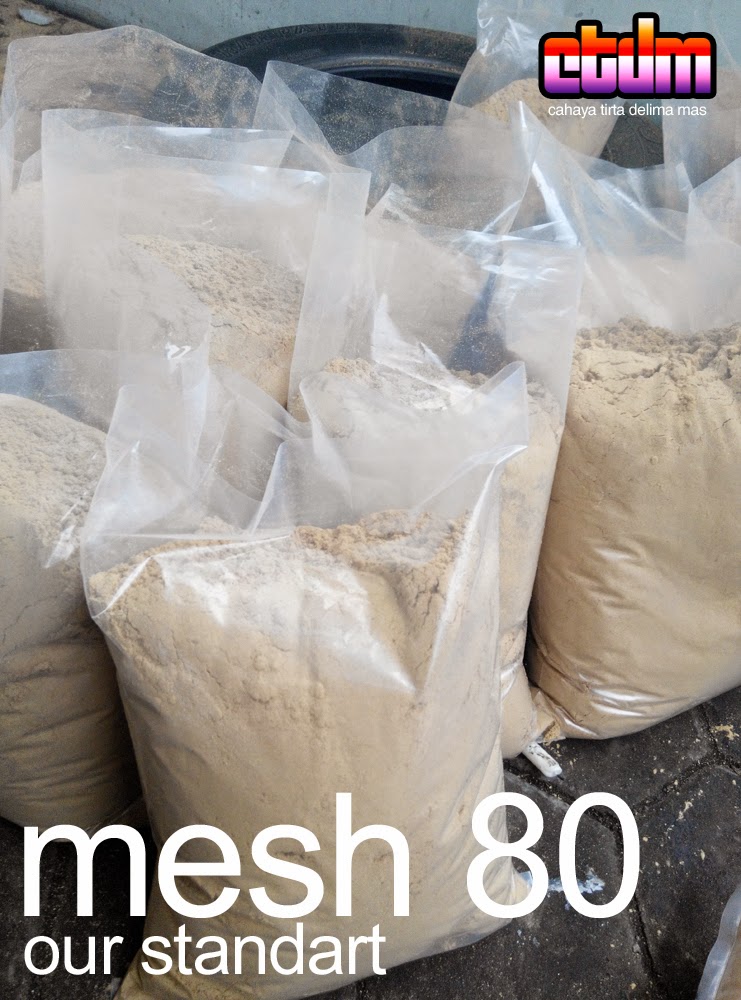
Ready Stock - Our Product Wood Fluor Manufacturer

WOOD POWDER
 (Tectona grandis) 


Stock Our production per month / week / day 

- Pure Teak wood flour (  Ready Stock  )  
  700 Ton Capacity Produck more / Monthly

- Teak wood flour mixture is Merbaung  (  Ready Stock  )  
  Produck Capacity 500 Tons more / Monthly

- Flour Mixes rosewood mahogany  (  Ready Stock  )  
  Capacity 700 Tons Produck more / Monthly

- Flour Mixes rosewood mahogany, Merbaung, Camphor, Trembesi [Hardwood]  
  (  Ready Stock  )  
  1500 Ton Capacity Produck more / Monthly

- Flour Mixes Mahogany wood, Merbaung, Camphor, Trembesi [Hardwood]  
  (  Ready Stock  )  
  Capacity Produck 2000 tons more / Monthly

- Wood Flour Sticky   (  Ready Stock  )  
  Produck Capacity 400 Tons more / Monthly

- Flour Mahogany Murny  [Coarse / Fine]  (  Ready Stock  )  
  350 Ton Capacity Produck more / Monthly


Teak wood flour or Teak wood powder is one of the main ingredients for the manufacture of mosquito coils, incense, glue mixture, mix for concrete flexibility, and is also used as material for motorcycle brake. We produce flour teak wood (teak wood powder) of teak wood sawdust (teak wood sawdust) with the following specifications:


Particle size :
60 mesh / 
80 mesh / (coarse) 
140 mesh / (0,4) 
200 mesh / (fine) 

Mesh Size ( % ) :  Min 98

Color : Brown - White Brown

Calories : 3000 >

Water Content : <13%

Packaging : 50 kg - 100 kg / sack

Raw Material: Teak Wood Sawdust and More 


Tectona grandis our Resources derived from teak wood that has the appropriate land is slightly alkaline, with a pH between 4.5 - 7 / 6-8, the nest (have good aeration), contains quite a lot of lime ( Ca, calcium) and phosphorus (P),  and is not flooded with water.

Type teak
  1. Teak  lengo  or  teak  night , have wood is hard, heavy, feels smooth when touched and the like containing oil (java:  lengo , oil;  night , candles). Dark, mottled and striped much.
  2. Teak  sungu . Black, solid and heavy (java:  sungu , horn).
  3. Teak werut , with hard wood and fiber choppy.
  4. Teak doreng , woody very hard with the color black striped lit, very beautiful.
  5. Teak flowers .
  6. Teak limestone , wood whitish because it contains a lot of lime. Less powerful and less durable.


Standard Class Type Wood Flour Manufacturer

Adhesives  (SMOOTH)  

A1  : Merbau, Camp er, Meranti, Mahogany [Hybrit] 

Combustion  (ROUGH)  

B1  : Acacia, Teak [50%], Balsa, Sono Keling, Mahogany [Hybrit] 


Application of Wood Flour Grajen Teak: 

- Flour Grajen Teak is widely used as a stuffing for incense. 

- Flour Grajen Teak is used as a filler and extender for plastic wood products. 

- Flour Grajen Teak is used for the manufacture of mosquito coils. 

- Flour Grajen Teak is used for material raw canvas motorcycle brakes. 

- Flour Grajen Teak is used as raw material for the manufacture of bricket.  

- Flour Grajen Teak is used for fertilizer mix mushroom cultivation. 

- Flour Grajen Teak is used to mix the fertilizer for the soil. 


Which Can be Used too by:

-Mosquito Coil Industry 
-Fertilizer 
-Oil and Oil Drilling 
-Furniture


Particle size 60 mesh / 80 mesh / 140 mesh (0,4)
Color                        : Brown
Water Content      : <13%
Packing                   : 50 kg / 100 kg / bags
Capacity                :  500 tons per month  


We also carry stock for Grajen 

MOLDING AND PLANNER 


 Offer Price: Please contact us  Click Here!

Sell ​​/ Teak Wood Flour Producers Mesh 60 - Mesh 80 - 100 mes up big thank Orders Large Capacity


Built 80 mesh - kayuserbuk.blogspot.com
Mahogany mix, Merbaung, Camphor, Trembesi [Hardwood]

Built 80 mesh - kayuserbuk.blogspot.com
Teak wood flour mixture is Merbaung

Built 80 mesh - kayuserbuk.blogspot.com
Pure Teak wood flour

Built 80 mesh - kayuserbuk.blogspot.com
Teak wood flour mixture is Mahogany

Built 80 mesh - kayuserbuk.blogspot.com
Mahogany mix, Merbaung, Camphor, Trembesi [Hardwood]

Built 80 mesh - kayuserbuk.blogspot.com
Teak wood flour mixture is Mahogany


Sell ​​Teak Wood Flour   

+  Selling Teak Wood flour mixture 

+  Selling Wood flour mixture Merbaung 

+  Flour Sticky  

Mesh:  60-80 - 140 mesh


Built 80 mesh - kayuserbuk.blogspot.com
Wood Flour Sticky

Built 80 mesh - kayuserbuk.blogspot.com
Teak wood flour mixture is Merbaung

Built 80 mesh - kayuserbuk.blogspot.com
Mahogany mix, Merbaung, Camphor, Trembesi [Hardwood]

Built 80 mesh - kayuserbuk.blogspot.com
Teak wood flour mixture is Mahogany, Merbaung, Camphor, Trembesi [Hardwood]  
Built 80 mesh - kayuserbuk.blogspot.com
Pure Teak wood flour

we produce teak wood flour 60-80 - 140 mesh .. monthly production capacity of 120 tons .. and will increase if there is a big demand quota Inshallah can meet the demand. Location : East Java teak Purpose flour  : Raw materials repellent, Incense , Brake linings, Bricket, Fertilizer etc. more .. For more further information please contact us ..


kayuserbuk.blogspot.com


Built 80 mesh - kayuserbuk.blogspot.com

How to Feed & Dry Wood Flour

Although the bulk of materials-handling equipment introductions were covered in our June pre-show issue, there were still a number of new developments waiting to be discovered at NPE 2000 in Chicago.
Although the bulk of materials-handling equipment introductions were covered in our June pre-show issue, there were still a number of new developments waiting to be discovered at NPE 2000 in Chicago. Several of them focused on how to dry and convey wood flour because of the growing trend toward wood-filled thermoplastics in North America. In addition, NPE displayed new blenders and feeders with improved networking features. Pneumatic-conveying entries boasted enhanced controls, lower noise, and simpler, less costly components. A more accurate box-feeding system for small parts also made its debut.

Handling wood flour

The explosion of interest in wood-flour fillers has prompted development of equipment designs specifically for this additive. Brabender Technologie Inc. in Mississauga, Ont., showed a recently developed version of its Flex-Wall gravimetric feeder tailored for wood flour. The Flex-Wall hopper prevents bridging by means of two flexible sides that are massaged by external rotating paddles. The wood-flour version has independent drive motors for the paddles and the feed auger. That allows increasing paddle frequency independent of feed rate. Brabender has installed 17 of these systems.
A loss-in-weight feed system for wood flour was also shown for the first time by Colortronic Inc. in Runnemede, N.J. The wood-feed system comes in multiple sizes and throughputs. It uses a special solid auger screw and horizontal and vertical agitator. The horizontal agitator has two blades and is driven by the auger motor. The vertical device is a long shaft with multi-directional arms that agitates material above and below the auger in the weigh hopper. Over 30 of these feeders are in production, all with throughputs of over 1000 lb/hr.
O.A. Newton in Bridgeville, Del., introduced new systems for handling wood flour at NPE. These include specially selected commercial grinders, dryers, and blenders, plus custom-fabricated silos, hoppers, scales, and pneumatic conveyors. Because wood flour is combustible, Newton also incorporates fire-suppression systems. Two Newton wood composite plants are in operation, and two more are under construction. The company also offers a new CD-ROM on handling wood flour.
Scott Equipment Co. of New Prague, Minn., showed its AST dryer for wood flour. Introduced eight years ago for general powder drying, it has since proven suitable for wood flour. It has three drying zones: The first is the flash-dry zone, where material is mixed in a very high-velocity, turbulent air stream (7700 fpm at 300 to 700 F for wood flour). About 65-75% of the drying occurs in this zone. In the second and third zones, the air velocity is slowed to 1100-1500 fpm and the product is mixed vigorously with the hot-air stream by adjustable paddles. The paddles can be pitched in a conveying, retaining, or neutral setting, depending on the moisture content of the material. Air dams between the zones help retain the material and air-classify the dry material from the wet.
The AST drying system has been installed at more than seven companies, several of which have multiple units. The very high air velocity and turbulent mixing are said to be well suited to combustible products like wood flour because there are no stagnant areas inside the dryer where material can potentially burn. This system has also been tested on peanut shells, flax, and other developmental composite building products.

New blenders & feeders

Makers of blenders and feeders showed new capabilities in networkable controls. Maguire Products Inc. in Aston, Pa., launched new networkable supervisory software called the G2 Gravimetric Gateway. This new data-acquisition package is designed exclusively for Maguire blenders. It adds networkability so office PCs can access material-usage data. It also supervises Maguire’s gravimetric extrusion-control software and totals materials throughput for coextrusion lines. (Previously, Maguire’s software monitored each blender in a coex line as a separate production unit.) G2 is based on Windows NT and uses a standard RS232 data port.
Mould-tek Industries, Toronto, introduced GXB touchscreen blender controls, which include networkable software for remote access.
Also networkable are new CT-100 controls for volumetric blenders from Comet Automation Systems Inc., Dayton, Ohio. Not limited to use with Comet equipment, CT-100 controls are retrofittable to any disc-fed blender.
Plast-Control Inc. in Newburyport, Mass., showed its smallest, least expensive extrusion control yet, the GT3, for continuous loss-in-weight extrusion control. It measures only 10 x 6 x 8 in. and tracks three weigh signals, controlling up to three ingredients at the extruder throat. (Previously Plast-Control’s smallest system was for nine components.) It displays production reports and interfaces with a printer or Ethernet network. The GT3 costs around $17,000 including mechanical devices, computer, and software.
Plast-Control also showed the first version of a new central networking system that ties all its systems to a host computer via Ethernet links for two-way transmission of setpoints and data.
Acrison Inc. in Moonachie, N.J., introduced what it calls “true loss-in-weight feeding”—i.e., not inferred from flow data. Acrison’s feeder uses a noncontact digital weight sensor that reportedly doesn’t need recalibration and is impervious to vibration and overload, while generating ultra-high resolution weight data. The new Model 270 claims accuracy of ±0.25% to 0.5%. The In-Line Weigh Feeder handles feed rates of 50 to 5500 cu ft/hr.
For micro-dosing, G.T.I. German Technology Imports Inc., Ramsey, N.J., showed the latest development from Englehardt GmbH in Germany. Englehardt’s dosing system is a series of sequentially discharging chutes and vibratory belts. One channel feeds for 0.5 sec, then stops for 5 sec while other channels discharge in sequence. The result is almost continuous flow into a small gain-in-weight hopper that takes up to 250-mg batches. What’s new is that the system now can meter additives at rates as low as 10 g/hr, where before the least was 50 g/hr.
Woywod Kunstoffmaschinen GmbH of Germany showed its gravimetric mixing and dosing equipment in the U.S. for the first time. (Its new U.S. rep is Polymer Machinery Co., Tallmadge, Ohio.) The systems are said to be far more accurate than standard gravimetric blenders that dose and weigh one material after another. Instead, up to eight standard components are metered and weighed simultaneously. Each ingredient hopper has a separate weigh hopper under it, which feeds via a spoke-like feed arm into a common feed throat. This feed throat is funnel shaped and mixes solely through a spiral flow action.

New conveying controls

In pneumatic conveying, several companies brought new networkable control packages based on Siemens ASI (actuator sensor interface) protocols and DeviceNet protocols. ASI, a two-conductor LAN, is widely used in Europe, while DeviceNet is more widely used here.
AEC/Whitlock, Wood Dale, Ill., showed new DeviceNet networkable controls for pneumatic conveying, utilizing Allen-Bradley PLCs and off-the-shelf electronic and networking components like ArmorBlock distributed I/O and KwikLink flat-cable wiring. Called the VT7-50 conveying control, it controls pneumatic conveying to 100 hopper locations with up to 14 pumps.
A second new conveying control from AEC/Whitlock is for smaller injection molding and extrusion plants or work cells. Called VT2-12, it handles up to 12 stations or hoppers.
Conair in Pittsburgh introduced its System One central integrated materials-handling controller for blenders, dryers, silos, and granulators, as well as cooling-water temperature control. It includes a central PC with touchscreen interface, but networking lets users view and set parameters from many locations. System One software includes functions such as monitoring levels in up to 48 silos, conveying to as many as 200 vacuum loaders with 10 pumps, and controlling up to 16 blenders, 32 dryers, 48 beside-the-press granulators, and 32 other pieces of downstream equipment, such as chillers, pullers, and cutters.
L-R Systems in New Lenox, Ill., offers new ASI-based controls that were shown for the first time at NPE. This modular control system links vacuum-loader stations. If more stations are added, new modules snap in without needing electrical installation.
Kongskilde Industries Inc. of Denmark (offices in Exeter, Ont.) showed for the first time a quiet blower for pneumatic conveying, called the Multi-Air Blower. It has three sizes of modular, bolted sound enclosures that fit a range of different blower sizes and models.
A new cone-bottom bulk unloader from Laidig Industrial Systems, Mishawaka, Ind., has a small auger that rotates 360° around a cone with a 45° or 60° slope in the storage bin. Although used in wood and grain handling for over 15 years, it has more recently been adapted for plastic materials that don’t flow well.
Colortronic showed its new rotary ZKW II two-component proportioning valve. This simplified unit is priced at only $750, well below any competing model, Colortronic says. The ZKW II pulses rapidly, switching pneumatically from one material to another to provide preset material ratios.

Conveying and weighing

Crizaf Automation Systems in Wickliffe, Ohio, a maker of belt conveyors, introduced a belt conveyor with a gravimetric box-feeding system designed to save money for molders of small parts. Conventional weigh-scale conveyors measure the combined weight of the conveyor, the box, and its contents, and accuracy is generally ±18 g, Crizaf says. When loading small parts, that can mean a difference of 8-10 parts, so molders must overfill the box by at least that amount. Crizaf’s approach is to use a small, separate weighing hopper to dispense into boxes on a conveyor. For high accuracy, the hopper weighs many small batches in rapid succession—a method said to be accurate to one part.
Dynacon-Dynamic Conveyor Corp. in Muskegan, Mich., also showed a new continuous-turn (radius) conveyor belt with an integrated weigh scale.

What is Wood Flour


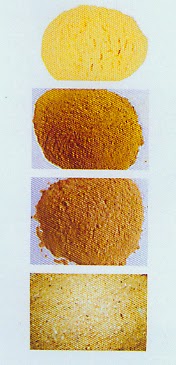
Wood flour is a finely ground wood powder. It is made by grinding, sizing and drying a consistent product. The size of the finished product is typically between 50 and 2,000 micron and the size should be consitant through the whole batch. In addition to using wood as the primary base product, macadamia nut shells can also be used for a high quality product.

Wood flour is commonly used as a filler in thermosetting resins such as Polyoxybenzylmethylenglycolanhydride, also known as Bakelite; and in Linoleum floor coverings. Wood flour is also the main ingredient in wood/plastic composite building products such as decks and roofs.

MicroMilling wood flour products are sold for the automotive industry for interior panels, to the plastics industry and can also be used for explosives, fireworks and metal casting industry. Macadamia nutshell flour is also used as a component of glue in the manufacture of plywood.

Epoxy Fillers

Epoxy fillers to mix with epoxy resin to thicken it. For most boatbuilding projects, a combination of silica powder and wood flour blend is all that is required in the way of fillers.
Epoxy fillers are sold by the litre.

Glass Fairing Balloons

When mixed into epoxy, white glass balloons produce a surface that can easily be sanded to a smooth finish before painting. Mix it with epoxy to form a thick paste and apply it to any rough surfaces. After curing, the layer can be sanded smooth. The trick is to sand most of it off so that the filler is only filling the holes. For a perfect finish the cycle can be repeated several times. It is possible to paint directly onto the sanded surface.
Because glass balloons make the epoxy layer porous, they are not recommended for below the waterline.

Micro-fibres

Micro-fibres give a greater tensile strength than other fillers.

Phenolic Micro-balloons

Unlike glass balloons, phenolic micro-balloons are not hollow, so they can be used below the waterline.

Silica Powder

Mix silica powder with epoxy when laminating two pieces of wood together. This thickens the epoxy slightly so that it is sufficient to bridge any small gaps between the wood. It produces a white mixture.

Wood Flour Blend

Wood flour blend is a strong filler that makes very strong fillets. By using in conjunction with silica powder the colour of the fillet can be adjusted to match the wood being filleted.

Professional Epoxy Coatings

A versatile solvent-free slow-cure epoxy that can be used for joints, fillets, glass fabric saturation and coating.
Sticks for mixing epoxy resin and filleting

Filleting and Mixing Sticks

Round-ended Mixing and Filleting sticks. Available in quantities of 25 or 100.
Professional epoxy filleting tools

Professional Filleting Tools

Six re-usable epoxy filleting tools of different radii.

Fragrances for Health Benefits: Incense perfumed Bali

Aroma therapy has become one of the ways for treatment in the healing of disease. 
Here I provide an overview and information about some of the benefits to be gained in Aroma Fragrance for health:


Citronella to reduce tension, relieve nasal congestion, overcome insomnia, snoring and migraines. Eucalyptus (eucalyptus) useful respiratory conditions, alleviate sensitive nose, bronchitis, asthma, coughs, colds, fever and flu. Lavender in order to facilitate sleep, relieve anxiety, overcome depression, reduces the feeling of tension. Green tea (green tea) to improve blood circulation, helps remove phlegm and clearing the lungs. Also slowing the aging process. Sandalwood (Sandalwood) is useful for eliminating anxiety and smells very helpful for meditation. Rose (rose) to create a romantic atmosphere and full of passion, improve metabolism and circulatory system, balance hormones, relieve sensitive skin sensitization and allergy . Flower ylang useful relieve high blood pressure, produce sebum on the skin. PeppermintAroma refreshing, evokes the atmosphere, reducing abdominal pain, tension, and cure headaches. Lotus (lotus) increase vitality, and concentration, reduce heat, improve the function of the spleen and kidneys. Lemon can reduce stress and anti depression, improve mood and relaxes your mind and gives a fresh feeling. Vanilla with soft and warm aroma able to calm the mind. Jasmine (jasmine) serves as aphrosidiac sensual to stimulate and create a romantic atmosphere. Strawberry can improve appetite, reduce heart disease, high blood pressure and cancer. (Source Republika.co.id)


Bali is known as the island of gods, fragrances once familiar with everyday life. In addition to the fragrance of the flowers are presented and used to worship, also smell the scent of incense smoke billowing every day. The aroma of incense, can be used for therapy and meditas accordance with the aroma fragrance. However, it should be noted that excessive aroma and a tendency to use chemicals are not good for health. To watch and to be considered in the purchase of incense used for worship, prioritizing natural ingredients and does not interfere with health. Would that we be careful, because if one chose instead obtained health but otherwise, even shortness of breath and pain are obtained, even possibly other pain-related chemicals we breathe. 

Empowering Citizens Through Herbal Incense

DURING THIS INCENSE SUPPLY IS STILL DOMINATED BY PRODUCERS OUTSIDE OF BALI, ESPECIALLY JAVA.

Empowering Citizens Through Herbal IncenseI Made teacher XI ( private dock via Cash )
Business opportunities incense  in Bali is very tempting. In one day, one family in Bali can use as many as 15 daily incense for religious ceremonies. If the majority of families in Bali using incense every day, niche business of producing incense certainly big enough.

Seeing a business opportunity that is,  I Made Dwija Nurjaya  business aim is toempower the people of Bali  in the environment. Looking at it, Dwija steady running this business for residents in Bali is no longer rely on incense products from outside Bali. With experience working in one of the creative business sector in Bali, Dwija tried setting up my own business in 2003 ago.

Dwija said, during this supply of incense is still dominated by producers outside of Bali, especially Java. In addition, the production of Chinese incense also quite dominate supply incense in Bali, in addition to India. He said, because of the needs of incense in Bali is very high, do not be surprised if the shipment incense from outside the island can reach 10 tons a day.

About five tons of incense comes from outside Bali, especially from areas in Java. Some are imported from countries such as China. If the imported parts could be taken over by local manufacturers in Bali, then counting the advantages that can be achieved is certainly quite tempting.

Although the supply of incense is still dominated by the incense of Java and imports, he graduated from the Faculty of Economics, University of Udayana, Bali is trying to become a major supplier in their homeland, especially for herbal incense product. He claimed that he only produces herbal incense in Bali even in Indonesia.

In terms of marketing, marketing teacher only herbal incense made by word of mouth and through online. Teacher did not find it difficult to market because homemade incense has special characteristics, the raw material of herbal. "I was advised by the government to Bali herbal incense has a typical," said teacher
Now, he is believed to still supply the incense into a number of areas in Bali. Through this herbal incense business, in 2013 the award was given Dwija "Means Culture Creative Economy" by the city government in Bali.

He is currently focusing his efforts to make growing and being the only major supplier of herbal incense in Bali, so the Balinese people no longer have a dependency on other areas.

According Dwija, important factors that encourage businesses to expand, because it empowers people in the neighborhood to produce incense.

Initial capital of Rp 300 thousand, now Multi-million turnover

Initial capital of Rp 300 thousand, now Multi-million turnoverSource: beritabali.com
Beritabali.com, Gianyar . Starting from feeling embarrassed (motivated) to go forward and be successful, Ketut Purnama decided to choose a trade profession as a livelihood. And now it was not proven wrong choice. From startup capital of only Rp 300 thousand, Ketut business is now growing rapidly with assets worth billions of dollars. "It all started from feeling embarrassed, when I worked in Kuta 12 years ago. Back then I had a thought, why in Kuta Bali society as marginalized. Its sales in Kuta, all people from outside Bali, Bali's no trade there. From accessories to food, all the sales from outside Bali, "said Ketut, as found in the location of his business, in the village of shampooing, Gianyar, not long ago. Because of embarrassment, motivated to go forward, Ketut then began to try a small business. With an initial capital of $ 300 thousand, he began to try handicraft business or handicraft. "The capital of Rp 300 thousand, the money to buy jeans actually. I then began to try your own business for aromatherapy incense suppliers to Kuta, and gratitude is then developed to eventually be like today, "he said. World trade, Ketut said, had started work at an early age.As a child, he had started a business firecrackers. "From the little I've fireworks trade, buy and sell fireworks in Herzliya in shampoo. Buy USD 25, then sell USD 75," he recalls.Hobbies trade, then forwarded when he enrolled at Gudeg city of Yogyakarta in 1996. At that time Ketut bring Bed Cover from Bali for sale in Yogyakarta. After graduating college, Ketut then try handicrafts business. He bought a duck craft of bamboo roots in Klaten for sale in Bali. "Craft ducks from bamboo root of this Klaten I sell to Ubud and Kuta, and was sold," he said.
     
       
2001 Ketut getting serious plunge in world trade by becoming the supplier of incense and lilis for aromatherapy. Its products are marketed in a number of locations in Kuta and Nusa Dua. After the success in the business of incense, candles, and other aromatherapy products, in 2009 began to look at the business by Ketut-by Balinese and minimarket.
       
"In 2009 I tried business souvenirs and a minimarket in Kuta, namely Q Mart and Wake Bali Art Market. Currently Q Mart has grown into 16 pieces in Kuta, Gianyar, and Denpasar," he said. Success in business minimarket and shops souvenirs, Ketut penetrated other businesses such as real estate business and the school began to level playgroup, kindergarten, to elementary school in 2010. Finally, in 2013 Ketut Purnama opening adventure tourism business in his hometown village of shampooing. Adventure tourism business is named Wake Bali Adventure. Now, Ketut business is growing with the number of employees to 400 employees. With an initial capital of Rp 300 thousand, now turning of the wheel business has produced a turnover of billions of dollars of income. For Ketut, the world's trade was sangt interesting, promising the world than any other job. In world trade, there are many challenges and lessons learned, in addition to a dynamic association.Related still lack the Balinese who pursue the world trade as himself, Ketut claimed was caused by a lack of courage factor in starting a business. "The courage of the Balinese that many , gambling he was brave, but when asked to go into business, why be scared. People want to quickly bring Bali skew the results, do not want to invest in the beginning, "said the man born in Herzliya, October 25, 1975. (Dev)


Wood flour, From Waste So Blessing

Wood flour, can be a variety of waste products of industrial and consumer product range can be derived from a variety of regular wood waste. They have applications in composite wood products, as a filler in plastics and adhesives, and a number of other consumer and industrial products. Wood waste is often burned (burned), fermentation (to make methane or alcohol) or used in the bioreactor (to make carbon and hydrogen) for the production of energy, fuels or chemicals industry. 
One of the products of sawmill waste is "wood flour ". CV Pomegranate Mas provide wood flour with 80 mesh qualification export quality for your needs. Please contact us on this page for more information.


In connection with the production of energy, forest products industry consumes 85 percent of all wood waste is used for energy production in the United States. The widespread use of biomass resources will directly benefit many forest products company whose growth generates more residue than they use internally. This excess material has the potential to become the basis for efforts to support the expansion of composite-material product manufacturing and utilization scheme co-similar product added value.Most of the production of electricity from biomass is consumed on the spot, with some manufacturers sell excess power into the public grid. Overall, 70 percent or more of the power of wood waste is co-produced with industrial process heat. 

Various social impacts resulting from the use of biomass for power generation. Market forces change how the US electricity industry operating fundamentals. Wood waste and agricultural biomass, wind power, municipal waste and a number of other raw materials reshape how electricity is produced, distributed, bought and sold. Power marketers are forced to offer eco-friendly electricity, including bio-power, at least partially, co-produced by the burning of urban yard and construction wood waste. 

New players are important agricultural community possible. The use of crop residues, animal manure and short-rotation intensive culture (SRIC) planting fast growing "grass wooden" tree species as a source of fuel could increase agricultural economy while solving some of the most harsh environmental issues in agriculture today. In SRIC system, "wood grass" cultivated species and then chipped in place for use in energy production (by burning) or wood product manufacturing (composite). The emergence of energy crops for the production of electricity is a new agricultural markets. However, these plants provide the benefits of soil conservation and nutrient management, soil and may not be compatible with the conservation incentives program of government set-aside. Increased use of wood-biomass will affect other groups, including the architectural and engineering firm, consultant, and processing and handling equipment vendors. 

Usage - Flour Wood shavings and 

sawdust shavings and may be reground into wood flour, or wood flour can be recovered as the size of the "dust "material that has been filtered and separated. Wood flour has a major industrial markets in industrial fillers, binders and extenders in industrial products such as epoxy resins, fertilizers, adhesives, absorbent material, roofing felt, inert explosive components, ceramic, tile floors, cleaning products, wood filler, caulks and putties, soil extenders and a vast array of plastic. Some like mesquite wood flour can be used in flavorings edible for human consumption or pets. 

shavings and wood flour can be marketed for use in composite wood products formed or laminated (eg, toilet seats, tables) in the automotive materials and oil and water insulation and products compaction for environmental control industry. Other uses include fillers, bulk shavings, sawdust, hog fuel (dry skin shavings), chip cigarette smoked bacon, barbeque cooking fuel and composite log fireplace. Landscaping applications include playground "foothold," riding arena and other "edge wood footing" (material safety margin and footpaths) and several exhibits and tradeshow applications 
Currently, the main use of dry wood shavings deployed is for horses and cattle sleep or small application of pet beds. It usually takes the form of an aromatic ingredient of eastern red cedar, soft ponderosa pine, pine and aspen chlorophyll. In some cases, wood products mixed with "non-timber" agricultural residues such as corn cobs. This product can be made ​​for pets such as dogs, cats, hamsters and gerbils or other small animals.Related products may include litter box liners, all natural tissue, and odor and stain eliminator.