Although the bulk of materials-handling equipment introductions were covered in our June pre-show issue, there were still a number of new developments waiting to be discovered at NPE 2000 in Chicago.
Although the bulk of materials-handling equipment introductions were covered in our June pre-show issue, there were still a number of new developments waiting to be discovered at NPE 2000 in Chicago. Several of them focused on how to dry and convey wood flour because of the growing trend toward wood-filled thermoplastics in North America. In addition, NPE displayed new blenders and feeders with improved networking features. Pneumatic-conveying entries boasted enhanced controls, lower noise, and simpler, less costly components. A more accurate box-feeding system for small parts also made its debut.
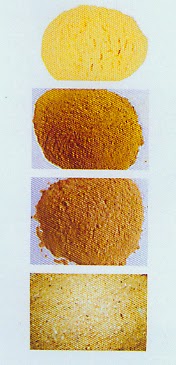
Handling wood flour
The explosion of interest in wood-flour fillers has prompted development of equipment designs specifically for this additive. Brabender Technologie Inc. in Mississauga, Ont., showed a recently developed version of its Flex-Wall gravimetric feeder tailored for wood flour. The Flex-Wall hopper prevents bridging by means of two flexible sides that are massaged by external rotating paddles. The wood-flour version has independent drive motors for the paddles and the feed auger. That allows increasing paddle frequency independent of feed rate. Brabender has installed 17 of these systems.
A loss-in-weight feed system for wood flour was also shown for the first time by Colortronic Inc. in Runnemede, N.J. The wood-feed system comes in multiple sizes and throughputs. It uses a special solid auger screw and horizontal and vertical agitator. The horizontal agitator has two blades and is driven by the auger motor. The vertical device is a long shaft with multi-directional arms that agitates material above and below the auger in the weigh hopper. Over 30 of these feeders are in production, all with throughputs of over 1000 lb/hr.
O.A. Newton in Bridgeville, Del., introduced new systems for handling wood flour at NPE. These include specially selected commercial grinders, dryers, and blenders, plus custom-fabricated silos, hoppers, scales, and pneumatic conveyors. Because wood flour is combustible, Newton also incorporates fire-suppression systems. Two Newton wood composite plants are in operation, and two more are under construction. The company also offers a new CD-ROM on handling wood flour.
Scott Equipment Co. of New Prague, Minn., showed its AST dryer for wood flour. Introduced eight years ago for general powder drying, it has since proven suitable for wood flour. It has three drying zones: The first is the flash-dry zone, where material is mixed in a very high-velocity, turbulent air stream (7700 fpm at 300 to 700 F for wood flour). About 65-75% of the drying occurs in this zone. In the second and third zones, the air velocity is slowed to 1100-1500 fpm and the product is mixed vigorously with the hot-air stream by adjustable paddles. The paddles can be pitched in a conveying, retaining, or neutral setting, depending on the moisture content of the material. Air dams between the zones help retain the material and air-classify the dry material from the wet.
The AST drying system has been installed at more than seven companies, several of which have multiple units. The very high air velocity and turbulent mixing are said to be well suited to combustible products like wood flour because there are no stagnant areas inside the dryer where material can potentially burn. This system has also been tested on peanut shells, flax, and other developmental composite building products.
New blenders & feeders
Makers of blenders and feeders showed new capabilities in networkable controls. Maguire Products Inc. in Aston, Pa., launched new networkable supervisory software called the G2 Gravimetric Gateway. This new data-acquisition package is designed exclusively for Maguire blenders. It adds networkability so office PCs can access material-usage data. It also supervises Maguire’s gravimetric extrusion-control software and totals materials throughput for coextrusion lines. (Previously, Maguire’s software monitored each blender in a coex line as a separate production unit.) G2 is based on Windows NT and uses a standard RS232 data port.
Mould-tek Industries, Toronto, introduced GXB touchscreen blender controls, which include networkable software for remote access.
Also networkable are new CT-100 controls for volumetric blenders from Comet Automation Systems Inc., Dayton, Ohio. Not limited to use with Comet equipment, CT-100 controls are retrofittable to any disc-fed blender.
Plast-Control Inc. in Newburyport, Mass., showed its smallest, least expensive extrusion control yet, the GT3, for continuous loss-in-weight extrusion control. It measures only 10 x 6 x 8 in. and tracks three weigh signals, controlling up to three ingredients at the extruder throat. (Previously Plast-Control’s smallest system was for nine components.) It displays production reports and interfaces with a printer or Ethernet network. The GT3 costs around $17,000 including mechanical devices, computer, and software.
Plast-Control also showed the first version of a new central networking system that ties all its systems to a host computer via Ethernet links for two-way transmission of setpoints and data.
Acrison Inc. in Moonachie, N.J., introduced what it calls “true loss-in-weight feeding”—i.e., not inferred from flow data. Acrison’s feeder uses a noncontact digital weight sensor that reportedly doesn’t need recalibration and is impervious to vibration and overload, while generating ultra-high resolution weight data. The new Model 270 claims accuracy of ±0.25% to 0.5%. The In-Line Weigh Feeder handles feed rates of 50 to 5500 cu ft/hr.
For micro-dosing, G.T.I. German Technology Imports Inc., Ramsey, N.J., showed the latest development from Englehardt GmbH in Germany. Englehardt’s dosing system is a series of sequentially discharging chutes and vibratory belts. One channel feeds for 0.5 sec, then stops for 5 sec while other channels discharge in sequence. The result is almost continuous flow into a small gain-in-weight hopper that takes up to 250-mg batches. What’s new is that the system now can meter additives at rates as low as 10 g/hr, where before the least was 50 g/hr.
Woywod Kunstoffmaschinen GmbH of Germany showed its gravimetric mixing and dosing equipment in the U.S. for the first time. (Its new U.S. rep is Polymer Machinery Co., Tallmadge, Ohio.) The systems are said to be far more accurate than standard gravimetric blenders that dose and weigh one material after another. Instead, up to eight standard components are metered and weighed simultaneously. Each ingredient hopper has a separate weigh hopper under it, which feeds via a spoke-like feed arm into a common feed throat. This feed throat is funnel shaped and mixes solely through a spiral flow action.
New conveying controls
In pneumatic conveying, several companies brought new networkable control packages based on Siemens ASI (actuator sensor interface) protocols and DeviceNet protocols. ASI, a two-conductor LAN, is widely used in Europe, while DeviceNet is more widely used here.
AEC/Whitlock, Wood Dale, Ill., showed new DeviceNet networkable controls for pneumatic conveying, utilizing Allen-Bradley PLCs and off-the-shelf electronic and networking components like ArmorBlock distributed I/O and KwikLink flat-cable wiring. Called the VT7-50 conveying control, it controls pneumatic conveying to 100 hopper locations with up to 14 pumps.
A second new conveying control from AEC/Whitlock is for smaller injection molding and extrusion plants or work cells. Called VT2-12, it handles up to 12 stations or hoppers.
Conair in Pittsburgh introduced its System One central integrated materials-handling controller for blenders, dryers, silos, and granulators, as well as cooling-water temperature control. It includes a central PC with touchscreen interface, but networking lets users view and set parameters from many locations. System One software includes functions such as monitoring levels in up to 48 silos, conveying to as many as 200 vacuum loaders with 10 pumps, and controlling up to 16 blenders, 32 dryers, 48 beside-the-press granulators, and 32 other pieces of downstream equipment, such as chillers, pullers, and cutters.
L-R Systems in New Lenox, Ill., offers new ASI-based controls that were shown for the first time at NPE. This modular control system links vacuum-loader stations. If more stations are added, new modules snap in without needing electrical installation.
Kongskilde Industries Inc. of Denmark (offices in Exeter, Ont.) showed for the first time a quiet blower for pneumatic conveying, called the Multi-Air Blower. It has three sizes of modular, bolted sound enclosures that fit a range of different blower sizes and models.
A new cone-bottom bulk unloader from Laidig Industrial Systems, Mishawaka, Ind., has a small auger that rotates 360° around a cone with a 45° or 60° slope in the storage bin. Although used in wood and grain handling for over 15 years, it has more recently been adapted for plastic materials that don’t flow well.
Colortronic showed its new rotary ZKW II two-component proportioning valve. This simplified unit is priced at only $750, well below any competing model, Colortronic says. The ZKW II pulses rapidly, switching pneumatically from one material to another to provide preset material ratios.
Conveying and weighing
Crizaf Automation Systems in Wickliffe, Ohio, a maker of belt conveyors, introduced a belt conveyor with a gravimetric box-feeding system designed to save money for molders of small parts. Conventional weigh-scale conveyors measure the combined weight of the conveyor, the box, and its contents, and accuracy is generally ±18 g, Crizaf says. When loading small parts, that can mean a difference of 8-10 parts, so molders must overfill the box by at least that amount. Crizaf’s approach is to use a small, separate weighing hopper to dispense into boxes on a conveyor. For high accuracy, the hopper weighs many small batches in rapid succession—a method said to be accurate to one part.
Dynacon-Dynamic Conveyor Corp. in Muskegan, Mich., also showed a new continuous-turn (radius) conveyor belt with an integrated weigh scale.



.png)