Showing posts with label Information. Show all posts

Saturday, December 27, 2014

Ready Stock - Our Product Wood Fluor Manufacturer

WOOD POWDER
 (Tectona grandis) 


Stock Our production per month / week / day 

- Pure Teak wood flour (  Ready Stock  )  
  700 Ton Capacity Produck more / Monthly

- Teak wood flour mixture is Merbaung  (  Ready Stock  )  
  Produck Capacity 500 Tons more / Monthly

- Flour Mixes rosewood mahogany  (  Ready Stock  )  
  Capacity 700 Tons Produck more / Monthly

- Flour Mixes rosewood mahogany, Merbaung, Camphor, Trembesi [Hardwood]  
  (  Ready Stock  )  
  1500 Ton Capacity Produck more / Monthly

- Flour Mixes Mahogany wood, Merbaung, Camphor, Trembesi [Hardwood]  
  (  Ready Stock  )  
  Capacity Produck 2000 tons more / Monthly

- Wood Flour Sticky   (  Ready Stock  )  
  Produck Capacity 400 Tons more / Monthly

- Flour Mahogany Murny  [Coarse / Fine]  (  Ready Stock  )  
  350 Ton Capacity Produck more / Monthly


Teak wood flour or Teak wood powder is one of the main ingredients for the manufacture of mosquito coils, incense, glue mixture, mix for concrete flexibility, and is also used as material for motorcycle brake. We produce flour teak wood (teak wood powder) of teak wood sawdust (teak wood sawdust) with the following specifications:
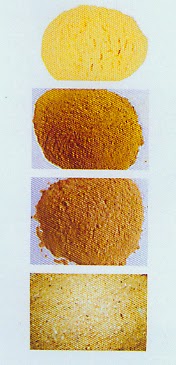


Particle size :
60 mesh / 
80 mesh / (coarse) 
140 mesh / (0,4) 
200 mesh / (fine) 

Mesh Size ( % ) :  Min 98

Color : Brown - White Brown

Calories : 3000 >

Water Content : <13%

Packaging : 50 kg - 100 kg / sack

Raw Material: Teak Wood Sawdust and More 


Tectona grandis our Resources derived from teak wood that has the appropriate land is slightly alkaline, with a pH between 4.5 - 7 / 6-8, the nest (have good aeration), contains quite a lot of lime ( Ca, calcium) and phosphorus (P),  and is not flooded with water.

Type teak
  1. Teak  lengo  or  teak  night , have wood is hard, heavy, feels smooth when touched and the like containing oil (java:  lengo , oil;  night , candles). Dark, mottled and striped much.
  2. Teak  sungu . Black, solid and heavy (java:  sungu , horn).
  3. Teak werut , with hard wood and fiber choppy.
  4. Teak doreng , woody very hard with the color black striped lit, very beautiful.
  5. Teak flowers .
  6. Teak limestone , wood whitish because it contains a lot of lime. Less powerful and less durable.


Standard Class Type Wood Flour Manufacturer

Adhesives  (SMOOTH)  

A1  : Merbau, Camp er, Meranti, Mahogany [Hybrit] 

Combustion  (ROUGH)  

B1  : Acacia, Teak [50%], Balsa, Sono Keling, Mahogany [Hybrit] 


Application of Wood Flour Grajen Teak: 

- Flour Grajen Teak is widely used as a stuffing for incense. 

- Flour Grajen Teak is used as a filler and extender for plastic wood products. 

- Flour Grajen Teak is used for the manufacture of mosquito coils. 

- Flour Grajen Teak is used for material raw canvas motorcycle brakes. 

- Flour Grajen Teak is used as raw material for the manufacture of bricket.  

- Flour Grajen Teak is used for fertilizer mix mushroom cultivation. 

- Flour Grajen Teak is used to mix the fertilizer for the soil. 


Which Can be Used too by:

-Mosquito Coil Industry 
-Fertilizer 
-Oil and Oil Drilling 
-Furniture


Particle size 60 mesh / 80 mesh / 140 mesh (0,4)
Color                        : Brown
Water Content      : <13%
Packing                   : 50 kg / 100 kg / bags
Capacity                :  500 tons per month  


We also carry stock for Grajen 

MOLDING AND PLANNER 


 Offer Price: Please contact us  Click Here!

Sell ​​/ Teak Wood Flour Producers Mesh 60 - Mesh 80 - 100 mes up big thank Orders Large Capacity


Built 80 mesh - kayuserbuk.blogspot.com
Mahogany mix, Merbaung, Camphor, Trembesi [Hardwood]

Built 80 mesh - kayuserbuk.blogspot.com
Teak wood flour mixture is Merbaung

Built 80 mesh - kayuserbuk.blogspot.com
Pure Teak wood flour

Built 80 mesh - kayuserbuk.blogspot.com
Teak wood flour mixture is Mahogany

Built 80 mesh - kayuserbuk.blogspot.com
Mahogany mix, Merbaung, Camphor, Trembesi [Hardwood]

Built 80 mesh - kayuserbuk.blogspot.com
Teak wood flour mixture is Mahogany


Sell ​​Teak Wood Flour   

+  Selling Teak Wood flour mixture 

+  Selling Wood flour mixture Merbaung 

+  Flour Sticky  

Mesh:  60-80 - 140 mesh


Built 80 mesh - kayuserbuk.blogspot.com
Wood Flour Sticky

Built 80 mesh - kayuserbuk.blogspot.com
Teak wood flour mixture is Merbaung

Built 80 mesh - kayuserbuk.blogspot.com
Mahogany mix, Merbaung, Camphor, Trembesi [Hardwood]

Built 80 mesh - kayuserbuk.blogspot.com
Teak wood flour mixture is Mahogany, Merbaung, Camphor, Trembesi [Hardwood]  
Built 80 mesh - kayuserbuk.blogspot.com
Pure Teak wood flour

we produce teak wood flour 60-80 - 140 mesh .. monthly production capacity of 120 tons .. and will increase if there is a big demand quota Inshallah can meet the demand. Location : East Java teak Purpose flour  : Raw materials repellent, Incense , Brake linings, Bricket, Fertilizer etc. more .. For more further information please contact us ..


kayuserbuk.blogspot.com


Built 80 mesh - kayuserbuk.blogspot.com

Delima Mas's Wood Flour is screened to your specifications.


Finely pulverized dried wood, used as a filler in thermosetting molding compounds. The woods used are resin-free softwoods such as pine, fir and spruce, and hardwoods. Wood shredded to fibrous form is also used as a reinforcement rather than a filler. Also known as Wood Meal. Delima Mas  Manufacturing's Wood Flour is screened to your specifications.

The unique thing about Delima Mas. is our ability to custom blend what our customers need. You tell us what particle distribution you desire and we can custom create a blend specifically for your needs. Standard Mesh sizes you can blend from are 20-100 mesh, with 100-200 mesh sieve's available upon mutual agreement. Bulk densities and ash vary with species blend. Moisture maximum is 6.5%.

Evaluation of Binding Effects in Wood Flour Board Containing Ligno-Cellulose Nanofibers

Abstract: Wood-based materials are used extensively in residual construction worldwide. Most of the adhesives used in wood-based materials are derived from fossil resources, and some are not environmentally friendly. This study explores nanofiber technology as an alternative to such adhesives. Previous studies have shown that the three-dimensional binding effects of cellulose nanofiber (CNF), when mixed with wood flour, can significantly improve the physical and mechanical properties of wood flour board. In this study, ligno-cellulose nanofibers (LCNF) were fabricated by wet disk milling of wood flour. Composite boards of wood flour and LCNF were produced to investigate the binding effect(s) of LCNF. The fabrication of LCNF by disk milling was simple and effective, and its incorporation into wood flour board significantly enhanced the physical and mechanical properties of the board.

Delima Mas Quality Control

Delima Mas has always been focused on producing the highest quality Wood Flour. All our products pass a number of quality control tests before final bagging to make certain our customers receive only the best filler or extender each and every time.
To ensure our high quality, the following extensive quality control procedures are utilized.


We start with testing the raw material. Only the highest grade is allowed into the production line.
All raw materials is stored in concrete pits then moved to silos to limit contamination from soil and debris.
All products are then manufactured under stringent production standards.
We only use a mechanical grinding process and NEVER use any chemicals or additives. All our products are chemical free.
The manufacturing process is continually monitored and product quality is consistently checked with multiple tests. These tests are performed as each Bulker or Pallet is manufactured.
Every Bulker or Pallet is tagged with the results of our quality monitoring and each delivery contains a certificate of analysis and identification numbers.

Epoxy Fillers

Epoxy fillers to mix with epoxy resin to thicken it. For most boatbuilding projects, a combination of silica powder and wood flour blend is all that is required in the way of fillers.
Epoxy fillers are sold by the litre.

Glass Fairing Balloons

When mixed into epoxy, white glass balloons produce a surface that can easily be sanded to a smooth finish before painting. Mix it with epoxy to form a thick paste and apply it to any rough surfaces. After curing, the layer can be sanded smooth. The trick is to sand most of it off so that the filler is only filling the holes. For a perfect finish the cycle can be repeated several times. It is possible to paint directly onto the sanded surface.
Because glass balloons make the epoxy layer porous, they are not recommended for below the waterline.

Micro-fibres

Micro-fibres give a greater tensile strength than other fillers.

Phenolic Micro-balloons

Unlike glass balloons, phenolic micro-balloons are not hollow, so they can be used below the waterline.

Silica Powder

Mix silica powder with epoxy when laminating two pieces of wood together. This thickens the epoxy slightly so that it is sufficient to bridge any small gaps between the wood. It produces a white mixture.

Wood Flour Blend

Wood flour blend is a strong filler that makes very strong fillets. By using in conjunction with silica powder the colour of the fillet can be adjusted to match the wood being filleted.

Professional Epoxy Coatings

A versatile solvent-free slow-cure epoxy that can be used for joints, fillets, glass fabric saturation and coating.
Sticks for mixing epoxy resin and filleting

Filleting and Mixing Sticks

Round-ended Mixing and Filleting sticks. Available in quantities of 25 or 100.
Professional epoxy filleting tools

Professional Filleting Tools

Six re-usable epoxy filleting tools of different radii.

Wood flour

Wood flour is finely pulverized wood that has a consistency fairly equal to sand or sawdust, but can vary considerably, with particles ranging in size from a fine powder to roughly the size of a grain of rice. Most wood flour manufacturers are able to create batches of wood flour that have the same consistency throughout. All high quality wood flour is made from hardwoods because of its durability and strength. Very low grade wood flour is occasionally made from sapless softwoods such as pine or fir.


Wood flour is commonly used as a filler in thermosetting resins such as bakelite, and in linoleum floor coverings. Wood flour is also the main ingredient in wood/plastic composite building products such as decks and roofs. Prior to 1920, wood flour was used as the filler in ¼-inch thick Edison Diamond Discs.[1]
Wood flour has found a use in plugging small through-wall holes in leaking main condenser (heat exchanger) tubes at electrical power generating stations via injecting small quantities of the wood flour into the cooling water supply lines. Some of the injected wood flour clogs the small holes while the remainder exits the station in a relatively environmentally benign fashion.
Wood flour can be used as a binder in Grain filler compounds.

Large quantities of wood flour are frequently to be found in the waste from woodworking and furniture companies. An adaptive reuse to which this material can be directed iscomposting.

Empowering Citizens Through Herbal Incense

DURING THIS INCENSE SUPPLY IS STILL DOMINATED BY PRODUCERS OUTSIDE OF BALI, ESPECIALLY JAVA.

Empowering Citizens Through Herbal IncenseI Made teacher XI ( private dock via Cash )
Business opportunities incense  in Bali is very tempting. In one day, one family in Bali can use as many as 15 daily incense for religious ceremonies. If the majority of families in Bali using incense every day, niche business of producing incense certainly big enough.

Seeing a business opportunity that is,  I Made Dwija Nurjaya  business aim is toempower the people of Bali  in the environment. Looking at it, Dwija steady running this business for residents in Bali is no longer rely on incense products from outside Bali. With experience working in one of the creative business sector in Bali, Dwija tried setting up my own business in 2003 ago.

Dwija said, during this supply of incense is still dominated by producers outside of Bali, especially Java. In addition, the production of Chinese incense also quite dominate supply incense in Bali, in addition to India. He said, because of the needs of incense in Bali is very high, do not be surprised if the shipment incense from outside the island can reach 10 tons a day.

About five tons of incense comes from outside Bali, especially from areas in Java. Some are imported from countries such as China. If the imported parts could be taken over by local manufacturers in Bali, then counting the advantages that can be achieved is certainly quite tempting.

Although the supply of incense is still dominated by the incense of Java and imports, he graduated from the Faculty of Economics, University of Udayana, Bali is trying to become a major supplier in their homeland, especially for herbal incense product. He claimed that he only produces herbal incense in Bali even in Indonesia.

In terms of marketing, marketing teacher only herbal incense made by word of mouth and through online. Teacher did not find it difficult to market because homemade incense has special characteristics, the raw material of herbal. "I was advised by the government to Bali herbal incense has a typical," said teacher
Now, he is believed to still supply the incense into a number of areas in Bali. Through this herbal incense business, in 2013 the award was given Dwija "Means Culture Creative Economy" by the city government in Bali.

He is currently focusing his efforts to make growing and being the only major supplier of herbal incense in Bali, so the Balinese people no longer have a dependency on other areas.

According Dwija, important factors that encourage businesses to expand, because it empowers people in the neighborhood to produce incense.

Wood flour, From Waste So Blessing

Wood flour, can be a variety of waste products of industrial and consumer product range can be derived from a variety of regular wood waste. They have applications in composite wood products, as a filler in plastics and adhesives, and a number of other consumer and industrial products. Wood waste is often burned (burned), fermentation (to make methane or alcohol) or used in the bioreactor (to make carbon and hydrogen) for the production of energy, fuels or chemicals industry. 
One of the products of sawmill waste is "wood flour ". CV Pomegranate Mas provide wood flour with 80 mesh qualification export quality for your needs. Please contact us on this page for more information.


In connection with the production of energy, forest products industry consumes 85 percent of all wood waste is used for energy production in the United States. The widespread use of biomass resources will directly benefit many forest products company whose growth generates more residue than they use internally. This excess material has the potential to become the basis for efforts to support the expansion of composite-material product manufacturing and utilization scheme co-similar product added value.Most of the production of electricity from biomass is consumed on the spot, with some manufacturers sell excess power into the public grid. Overall, 70 percent or more of the power of wood waste is co-produced with industrial process heat. 

Various social impacts resulting from the use of biomass for power generation. Market forces change how the US electricity industry operating fundamentals. Wood waste and agricultural biomass, wind power, municipal waste and a number of other raw materials reshape how electricity is produced, distributed, bought and sold. Power marketers are forced to offer eco-friendly electricity, including bio-power, at least partially, co-produced by the burning of urban yard and construction wood waste. 

New players are important agricultural community possible. The use of crop residues, animal manure and short-rotation intensive culture (SRIC) planting fast growing "grass wooden" tree species as a source of fuel could increase agricultural economy while solving some of the most harsh environmental issues in agriculture today. In SRIC system, "wood grass" cultivated species and then chipped in place for use in energy production (by burning) or wood product manufacturing (composite). The emergence of energy crops for the production of electricity is a new agricultural markets. However, these plants provide the benefits of soil conservation and nutrient management, soil and may not be compatible with the conservation incentives program of government set-aside. Increased use of wood-biomass will affect other groups, including the architectural and engineering firm, consultant, and processing and handling equipment vendors. 

Usage - Flour Wood shavings and 

sawdust shavings and may be reground into wood flour, or wood flour can be recovered as the size of the "dust "material that has been filtered and separated. Wood flour has a major industrial markets in industrial fillers, binders and extenders in industrial products such as epoxy resins, fertilizers, adhesives, absorbent material, roofing felt, inert explosive components, ceramic, tile floors, cleaning products, wood filler, caulks and putties, soil extenders and a vast array of plastic. Some like mesquite wood flour can be used in flavorings edible for human consumption or pets. 

shavings and wood flour can be marketed for use in composite wood products formed or laminated (eg, toilet seats, tables) in the automotive materials and oil and water insulation and products compaction for environmental control industry. Other uses include fillers, bulk shavings, sawdust, hog fuel (dry skin shavings), chip cigarette smoked bacon, barbeque cooking fuel and composite log fireplace. Landscaping applications include playground "foothold," riding arena and other "edge wood footing" (material safety margin and footpaths) and several exhibits and tradeshow applications 
Currently, the main use of dry wood shavings deployed is for horses and cattle sleep or small application of pet beds. It usually takes the form of an aromatic ingredient of eastern red cedar, soft ponderosa pine, pine and aspen chlorophyll. In some cases, wood products mixed with "non-timber" agricultural residues such as corn cobs. This product can be made ​​for pets such as dogs, cats, hamsters and gerbils or other small animals.Related products may include litter box liners, all natural tissue, and odor and stain eliminator.

How to Calculate Kubikasi Wood

For those of you who are involved in the world of timber, must be very important for you to know how to calculate cubication wood. Cubication wood itself is the value of the amount of volume that is on the wood, and the value of the unit using cubic meters (M3).By knowing the value of a wood cubication, then we can also interpret or know the price of wood is based on the value kubikasinya.


The method used to calculate cubication on logs or logs of wood is different in a way to calculate cubication sawn wood or wood that has been shaped board. This is because physically between the two different forms. So each has its own formula for calculating the value of kubikasinya.

For how to calculate cubication logs or logs
formula used is (P x D x D x 0.7854): 10,000 = value cubication

Specification:

how to calculate the wood cubication  P  is the length of wood that is expressed in meters
D  is the diameter of the timber which is expressed in units of cm
Case in point: If someone is going to buy a timber that is still in the form of logs with a diameter of 25 cm and a length of 2 meters then, if using the above formula, the value cubication contained in the timber is (2 x 25 x 25 x 0.7854): 10,000 = 0.098175 M3.

Thus, the value of cubication on a wooden logs to be acquired by such person, or nearly one-tenth of 0.098175 cubic.

Nb: wood cubication value obtained by using this formula is almost the same (slightly lower) with the value of existing timber cubication cubication table logs forestry. Or if you do not want tired calculate by using the formula, you can look directly at the table in the table cubication owned forestry forestry.

As for the formula or calculating cubication sawn timber or board
formula used is (T x L x P): 10,000 = value cubication
Specification:

T is thick wooden board expressed in units of cm
L is the width of a wooden board which is calculated in units of cm
P is the length of a wooden board which is calculated in meters
Case in point: on a wooden board with a size of 4 cm thick, 25 cm wide and 2 meters long, then the amount of cubication on the wooden board when using the above formula is (4 x 25 x 2): 10,000 = 0.02 M3 or need 50 planks to reach one cubic.

Ways of calculating cubication wood on not only for certain types of wood but can be applied to all types of commercial wood, such as teak, Falcata, Mindi wood, mahogany etc.